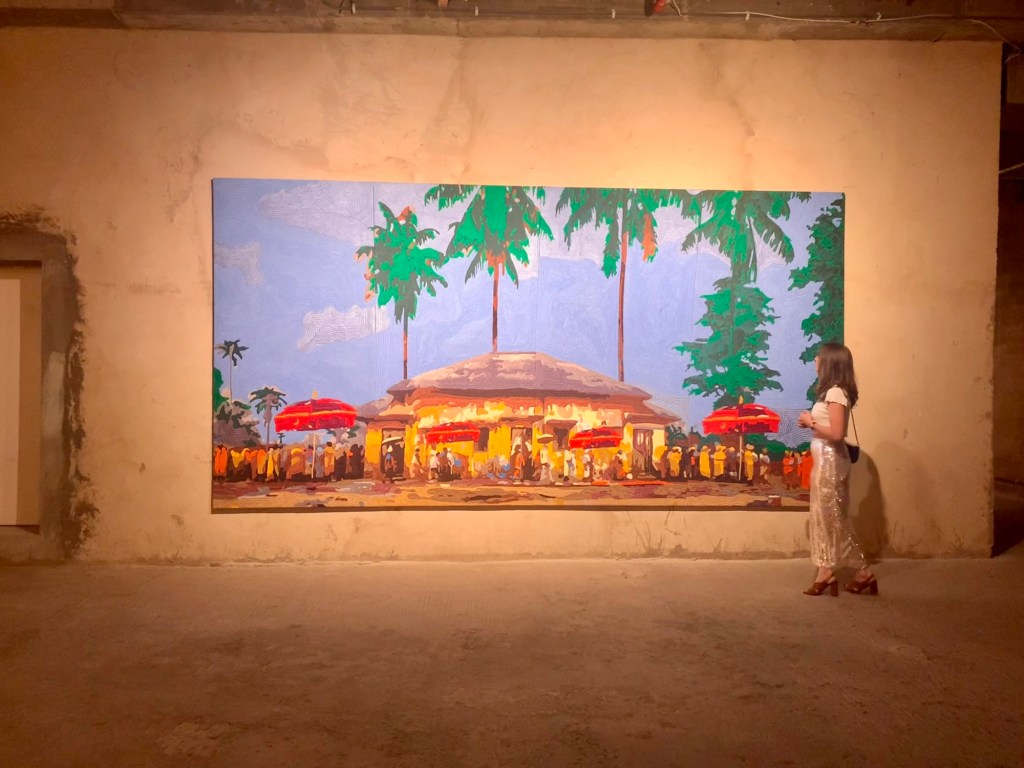
Fast-forward, today is the last day of my trip in Accra, Ghana.
Looking back at these short two weeks, I think of fondly of my time here.
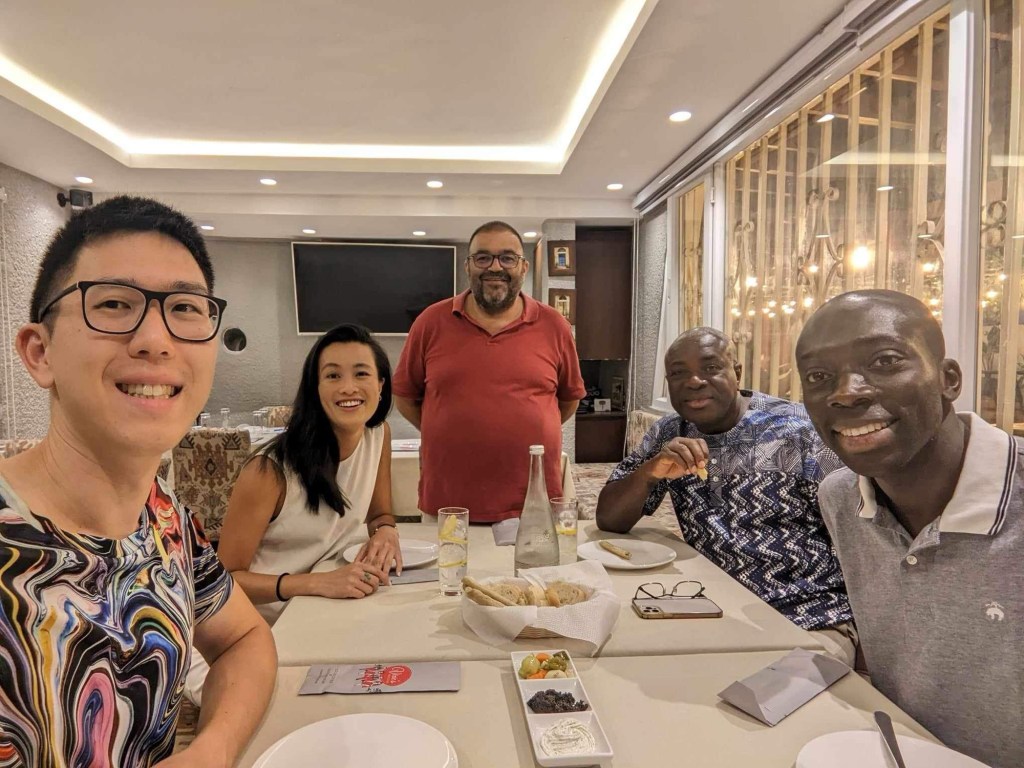
Not only have I reconnected with my best friends, Howard and Johanan, but have met a handful of wholesome, kind souls in the local community.
Yet, I’ll never forget the few one-on-one conversations with Johanan’s dad, in which he shared in greater detail about the history of Africa and its implications for the modern West Africa.
If France didn’t have its African colonies, it would have been a third world country.
How funny it is that in my pro-Western education, we may have over glamorized the Western influence in the world.
Every morning growing up, my parents would turn on CNN. Raised mostly in Taipei, my world view is much with a Western-centric values. Yet the more I travel, the more I learn about how the world really works, especially in Africa, Central Asia and Middle East.
One of my biggest learnings for my trip to Ghana is to learn about French neocolonialism in Africa.
French used to be a powerful colonial power. At its height, France occupied 10% of the global landmass, stretching from South East Asia to West Africa. More than half of the African countries were once colonies of France.
In the 16th and 17th century, France was the second largest empire next to the Spanish Empire.
In 19th, and 20th century, France again held the position of the second largest empire, this time next to the British Empire.
Okay, so how is this relevant to my conversation with Johanan’s dad?
In the plainest term, countries that were previously colonized by France are often in a debilitated modern state.
According to data from the International Monetary Fund,
11 out of the 15 poorest countries in Africa were colonies of France
Post WWII, starting in 1960, African countries began to gain independence from their colonial rulers. While the Brits generally relinquish the colonies willingly, and facilitated the establishment of new governments, the French forced nations to sign “cooperation agreement” which outlined the nature of their relationships moving forward.
The independence came at a cost.
In exchange for foreign aid, France was granted access to natural resources, maintained troops and most importantly, kept the CFA Franc currency.
CFA Franc is the last colonial currency that is still in widespread use.
In practice, the countries use CFA Franc has no control over its monetary sovereignty, and this has significant implications to its economy.
Let me explain.
CFA Francs are pegged to Euros. To maintain the exchange rate at a fixed rate, these “indepdenpdent” Francophone countries are forced to deposit 50% of their foreign reserves with French treasury, plus an additional 20% as collateral.
That is basically 70% of the reserve, gone.
Further in any given year, these nations can only borrow up to 15% of their reserves. To borrow beyond the limit, they must go through the Central Bank of France and request for loans.
So in essence, the fundamental structure of CFA Franc handicaps the economic prospects and infrastructure development of the Francophone African countries.
Beyond, when the Euro appreciates in value, the CFA Franc also appreciates. When CFA Franc appreciates, it makes import more affordable but export more expensive.
In the previous article, I talked about how Africa is an import heavy country.
With their currency appreciating, wouldn’t it make more sense to import rice from Asia rather than investing in domestic agriculture production?
Consequently, there are diminished incentives for CFA Franc countries to invest and develop their own agriculture, and value-adding manufacturing capabilities.
In short, the few conversations I had with Johanan’s dad centers around cacao trade, mining, geopolitics and history of Africa- how she has been exploited and treated unfairly, like through CFA Franc, and how there is hope particularly for the rich, the willing and the able.
“Is it the right time to start a company in Africa?”, I asked one night at the elongated dinning table imported from Italy.
“Absolutely,” said, Johanan’s dad with certainty.
Sources:

 The Vicarious Humble Beginning
Leave a comment